

Evading the Surveillance Grid: A Street Samurai’s Guide to Urban Anonymity
By Andrew Lowe, TalaTek Senior Information Security Consultant
The streets have eyes. Flock Safety cameras track every vehicle. Ring doorbells create neighborhood surveillance networks. Amazon sells access to police departments. This isn’t some dystopian future, it’s today. The panopticon is operational, and you’re already in it. But street samurai don’t surrender. We adapt, evade, and strike back.
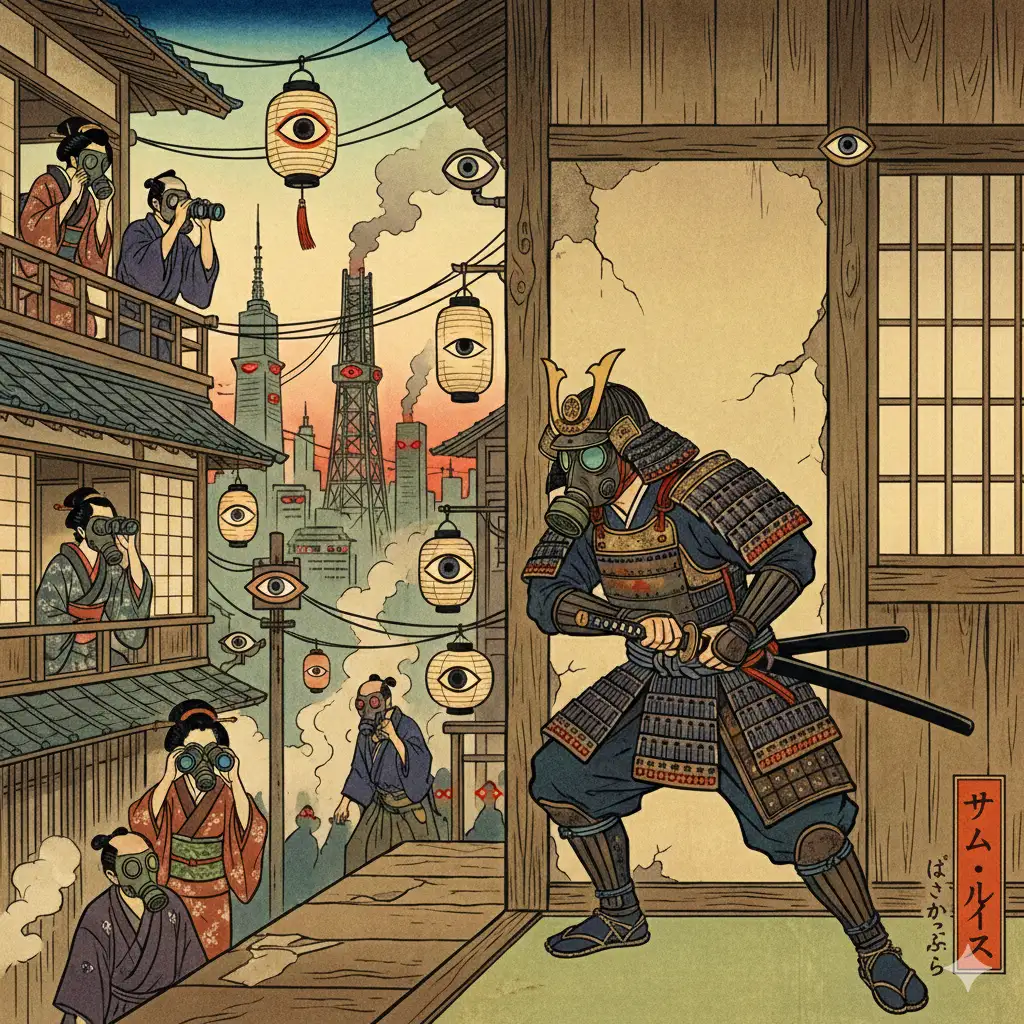
Mapping the Grid
Flock Safety deploys Automatic License Plate Readers (ALPR) across neighborhoods and municipalities. Every passing vehicle gets logged: plate number, timestamp, location, make, model. The company pitches this as crime prevention. Reality: it’s a movement database of innocent citizens. No opt-out. No notification. No oversight.
Ring’s Neighbors app turns ordinary citizens into informants, sharing doorbell footage with each other and law enforcement. Amazon keeps the full scope of police partnerships classified. Combined with Ring’s law enforcement portal, this creates privatized surveillance that bypasses warrant requirements.
Reducing Your Signature
Research whether your area runs Flock cameras. Check community forums, city council minutes, municipal records. Some jurisdictions publish camera locations. Most don’t. Attend city council meetings. Voice opposition. Demand data retention limits. The system thrives on citizen ignorance.
For operational security against existing cameras, understand their technical limitations. ALPRs need clear plate visibility. Some privacy advocates use anti-camera plate covers, often illegal, but they interfere with automated readers while staying human-readable. More practical: vary your routes. Surveillance gains power from pattern recognition. Break your patterns, degrade their data.
Hardening Your Home Perimeter
If you run security cameras, choose systems with local storage. No cloud dependency. Brands such as UniFi and Reolink keep footage on-premises. Disable cloud uploads and remote access unless operationally necessary. Position cameras to cover your property without capturing public spaces or neighbors’ domains. Don’t feed the surveillance apparatus.
For smart doorbells, kill Neighbors app sharing. Disable all law enforcement data sharing in your Ring settings. Better option: replace Ring entirely with privacy-focused alternatives that don’t funnel data to Amazon’s intelligence network.
Digital Emissions Control
Your phone constantly broadcasts identifiers. WiFi, Bluetooth—both create tracking points exploited by retailers and surveillance systems. Kill them when not needed. Use airplane mode when your location isn’t operationally relevant.
Consider burner numbers through MySudo or Hushed for public-facing comms. This breaks correlation between your movements and true identity. Avoid loyalty programs and mobile check-ins—they create location logs tied to your real name.
Collective Action: Hacking the System
Individual countermeasures matter, but systemic change requires organized resistance. Support digital rights organizations such as Electronic Frontier Foundation (EFF) and the American Civil Liberties Union (ACLU). They fight mass surveillance in courts and legislature. Push for local laws mandating surveillance transparency, strict data retention limits, and community consent before deployment.
Several cities banned facial recognition and restricted ALPR networks. This happened because citizens showed up and demanded accountability. You can do the same.
Know Your Operational Parameters
In public spaces, you have minimal privacy expectations. Photography and recording are generally legal. But how that data gets used, stored, and shared may be regulated. Some states require law enforcement warrants before accessing private surveillance footage. Others mandate data breach notifications from surveillance companies.
If cops come asking about footage or ALPR data, you have no obligation to cooperate. Politely decline. Consult legal counsel. Your cooperation could implicate yourself or others in unforeseen ways.
The Panopticon Runs on Apathy
Mass surveillance thrives because people don’t fight back. Awareness disrupts corpo operations more effectively than any single technical countermeasure. The grid is powerful, but it’s not omnipotent.
You’re a data point in their system. An entry in their database. A dot on their movement map. But you can be a ghost. A glitch. A null value that breaks their algorithms.
The megacorps built this panopticon, and the state legitimized it. They want compliance, predictability, and control. Give them noise. Give them nothing. Stay alert, stay mobile, stay free.
Welcome to the grid, samurai. Now learn to move through it like smoke.
